Financially conflicted. How Nvidia nudged Micron onto the AI train. Kültürkampf & Chinmaxxing Russian elites.
Great links, images, and reading from Chartbook Newsletter by Adam Tooze

Thank you for opening your Chartbook email.
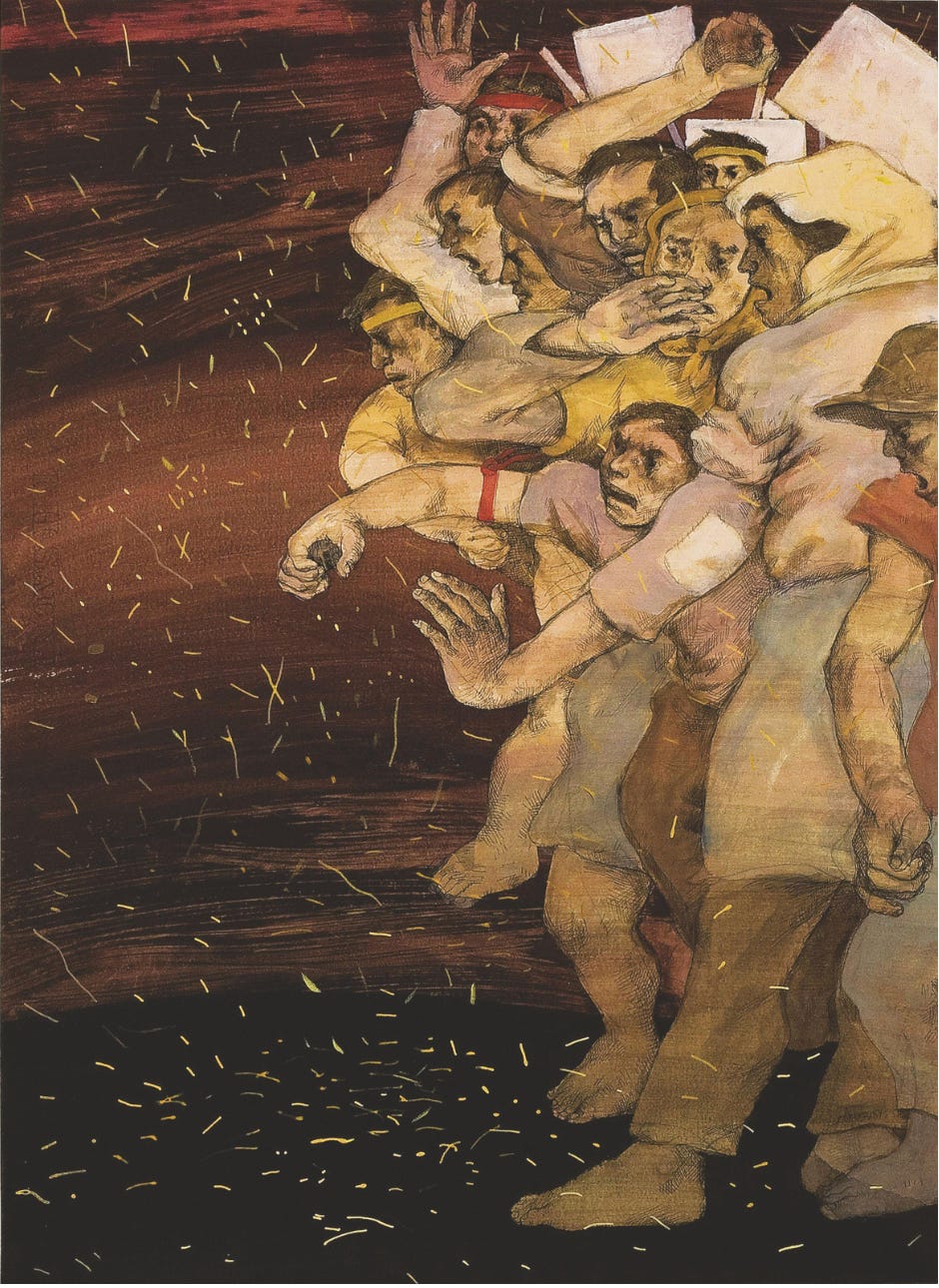
Benedicto Reyes Cabrera, Yellow Confetti, 1984
Financially conflicted
“We’re, like, ‘Oh, my God, what if we have an emergency?’” he said. “Are we going to be able to stand up from that?’” Some 51% of U.S. adults place themselves alongside Wallace in this financial gray area, according to a new survey by Edward Jones and Gallup, their first on the topic. The survey, expected to be released Tuesday, labels this group financially “conflicted,” with respondents describing feeling a mix of stability and uncertainty. Roughly 5,000 people were polled in late March and early April. People feel conflicted because they are weighing more than today’s bills, according to Penny Pennington, managing partner at Edward Jones. They are looking ahead at the schools their children and grandchildren might attend, the lives they will lead and the cost of making it possible. Just 16% of respondents expressed a state of confidence about their money, a separate bucket that the survey categorizes as financially “fulfilled.” On the other end of the spectrum, 32% said they were financially stressed. The state of limbo cuts across income levels. Roughly seven in 10 households earning $135,000 or more said they don’t feel financially fulfilled. …
For years, memory was a commodity business, with customers such as Apple and Dell able to switch suppliers easily and drive down prices. That volatility made Micron wary of betting early on high-bandwidth memory, even as South Korean rivals pushed ahead. Nvidia’s AI build-out forced a rethink. Micron said in March it had signed its first five-year supply agreement, a landmark shift for an industry long driven by short-term pricing swings.
Source: Wall Street Journal
How a nudge from Nvidia propelled frugal Micron into the AI boom and a $1 trillion market cap By Stephen Nellis
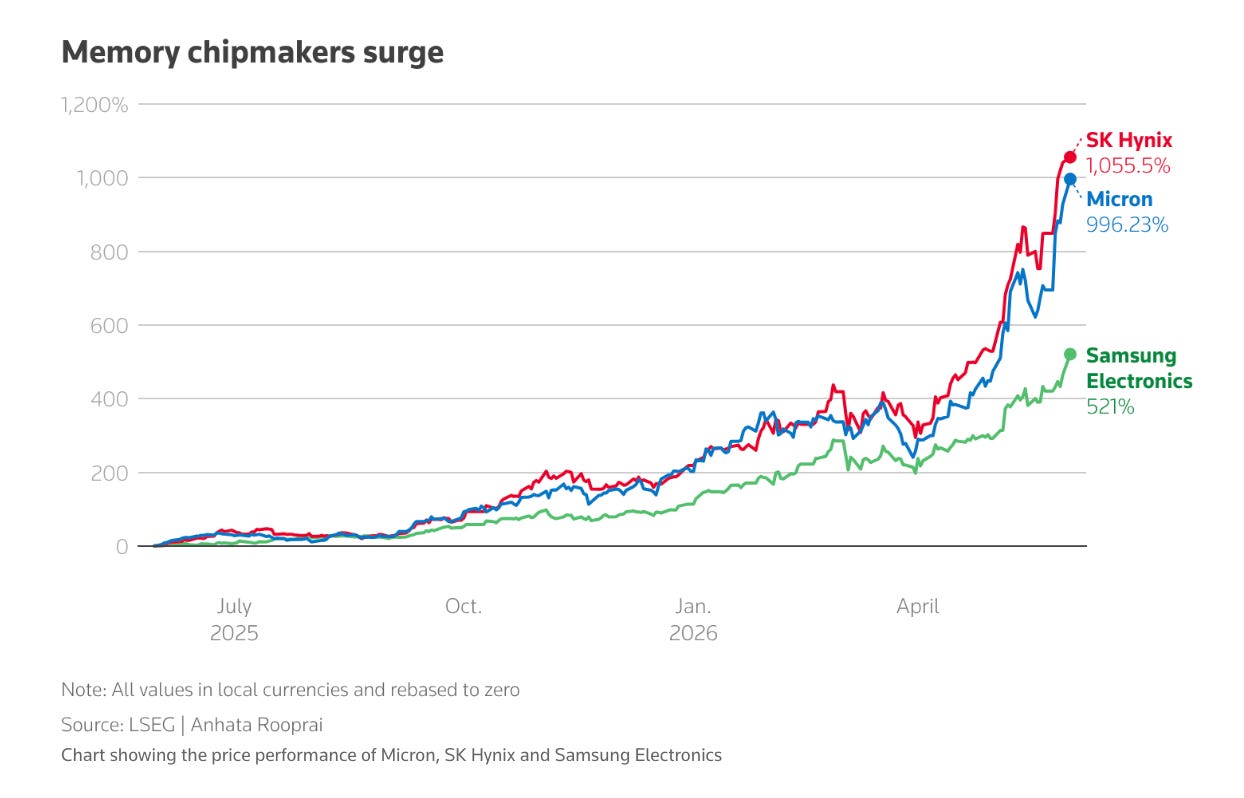
Three years ago, Nvidia CEO Jensen Huang met Micron boss Sanjay Mehrotra and outlined how he expected the memory market to evolve, Huang said in a media interview last month. Huang had long bet early that memory, and not just processors, would become a critical bottleneck for AI, forcing suppliers like Micron to rethink both technology and spending.“I was really grateful that Micron and Nvidia really lined up all of our road map,” Huang said in the interview. As Nvidia and other AI leaders rewired data centers, memory shifted from a commodity component to specialized high bandwidth memory (HBM) chips tailored to specific processors. These chips are co-designed for customers, making Micron’s offerings for Nvidia distinct from those it sells to Advanced Micro Devices (AMD.O), opens new tab or others. Micron’s chips are now tightly integrated into AI systems, including Nvidia’s upcoming Vera Rubin platform. That alignment reshaped Micron’s trajectory, pulling it into long-term, higher-margin deals and giving investors greater confidence in its earnings. Micron’s stock has surged roughly ten-fold over the past year. The company crossed the $1 trillion market capitalization on May 26, joining an elite group of trillion-dollar firms including Samsung. A day later, Hynix hit that mark.
Source: Reuters
China’s subsidy regime
Good for Guyana
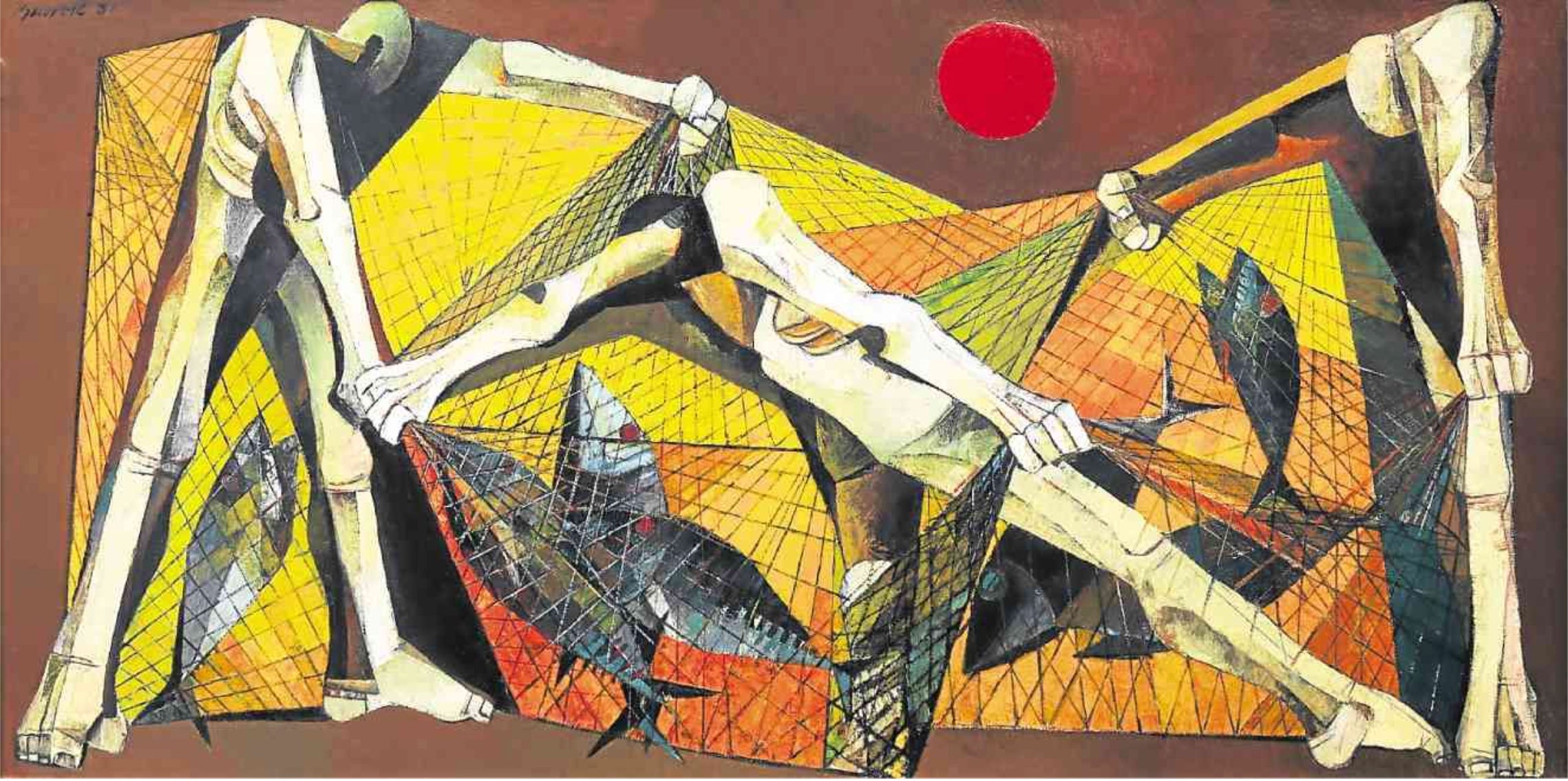
Benedicto Cabrera, Fishermen, 1978
What Kind of Sovereignty? Turkey, Europe, and the politics of defense industrial integration by Selim Koru
“Today, Europe needs Turkey more than Turkey needs Europe.” Erdoğan said today, “tomorrow, that need is going to increase.” Is that true? There have been some developments recently regarding Turkey-EU relations, especially regarding defense industry cooperation, that are alarming to me. As I’ve written before, I don’t think we have a real discussion about what’s going on in this relationship. The real story isn’t that Europe is snubbing Turkey, it’s that the two sides are organizing their defense industries around incompatible conceptions of sovereignty, and almost nobody in Ankara wants to admit it.
The pressure is building up because of decisions Europe has recently made about their defense industry. The European Parliament’s Security and Defence Committee (SEDE) passed an amendment excluding Turkey from the defense-related components of the next Horizon Europe (2028–2034), the EU’s flagship research and innovation funding program. Turkey is also excluded from Security Action for Europe (SAFE), the EU’s new defense financial instrument, while Canada has already joined. Countries like Ukraine, Japan, South Korea, and a bunch of smaller countries (mostly in the Balkans) have other preferential arrangements with the bloc. Turkey might still be able to join some of these structures in some capacity, but it’s not looking great. None of the votes on it have been particularly close.
The Turkish policy elite has responded with bitter words. Last week saw a volley of op-eds from Ankara and Istanbul denouncing the EU’s decisions. Thanks to AI, these things are now of much better quality than they used to be, but the emotional undercurrent remains the same: the Europeans are making a strategic blunder by excluding Turkey. The world is becoming a much more dangerous place, Europe doesn’t know how to defend itself, and Turkey is here to help. In fact, considering Turkey’s recent achievements, Europe should be begging Turkey to enter. It’s true that Turkey has a strong industrial base, an efficient drone sector, a relatively young workforce, and decent battle experience. But is Europe really toast without Turkey?

HEY READERS,
THANK YOU for opening the Chartbook email. I hope it brightens your day.
I enjoy putting out the newsletter, but tbh, what keeps this flow going is the gene
rosity of those readers who clicked the subscription button.

If you are persuaded to click, please consider the annual subscription of $50. It is both better value for you and a much better deal for me, as it involves only one credit card charge. Why feed the payments companies if we don’t have to.
Denise Levertov, Overheard Over S.E. Asia, 1972

H/t Tim Barker
Benedicto Cabrera, Desaparecidos, 1984