Concentration risk. The middle technology trap. C5+1 & "synchronous world".
Great links, images, and reading from Chartbook Newsletter by Adam Tooze

Thank you for opening your Chartbook email.
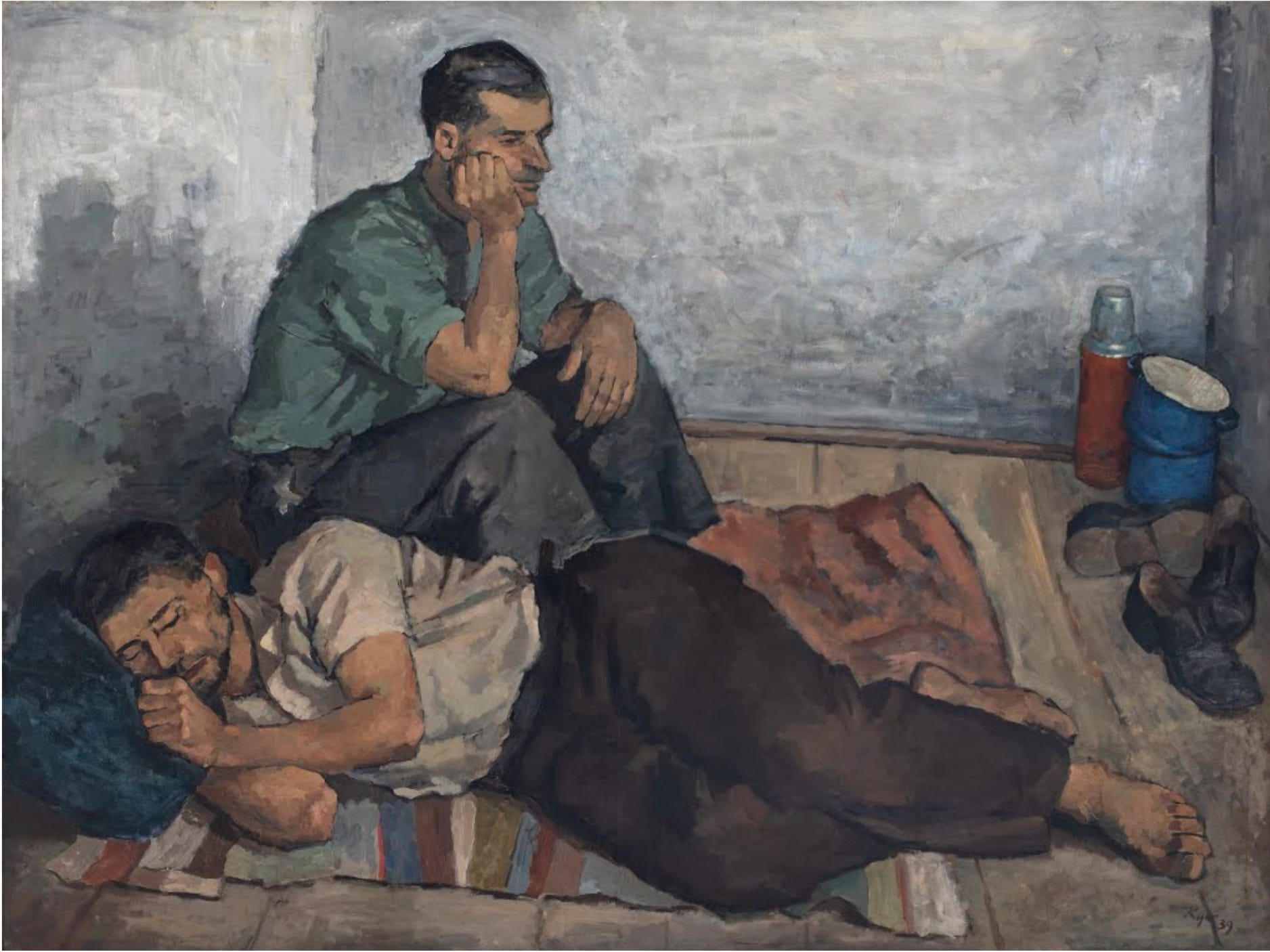
Đorđe Andrejević, Kun In the cell, 1939
Comparing tech booms
According to the IMF, relative to full-on insanity of the 1990s dot.com bubble, the main thing to worry about with regard to the AI boom is not excessive valuations, but the extreme market concentration in the Mag-7.
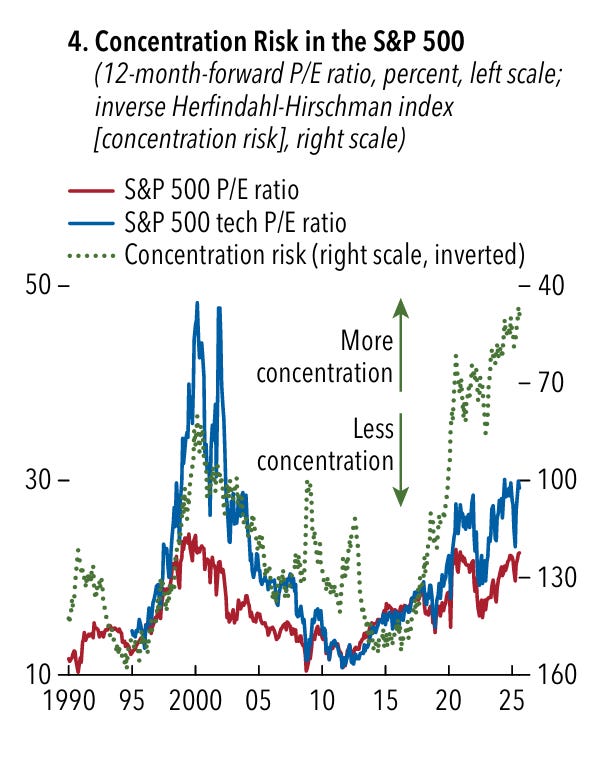
Concentration risk within the S&P 500 is at a historic high, with a narrow group of stocks spanning mega-cap IT and AI-related firms driving the broader index. The IT sector accounts for a weight of 35 percent of the total S&P 500, similar to during the dot-com bubble, but with the Magnificent 7 alone accounting for 33 percent of the index. Consequently, a measure of concentration risk based on the Herfindahl-Hirschman Index is now substantially higher than during the dot-com bubble (Figure 1.3, panel 4, green line). Furthermore, while concentration risk for the S&P 500 index has witnessed an increase by about 20 percentage points over the past decade (when normalized by number index constituents) comparable benchmark indices in different jurisdictions have been characterized by far less of an increase over the same period.
Against substantial AI-related investments (for example, information-processing equipment, data centers) the possibility of mega-cap stocks failing to generate expected returns to justify current lofty equity valuations could trigger deterioration in investor sentiment and make the stocks susceptible to sudden, sharp correction. Valuations would collapse as a result, making the broader benchmark index vulnerable to downturns.
Source: IMF
How an abrupt shock to yields might trigger mutual fund Treasury sales.
The middle technology trap
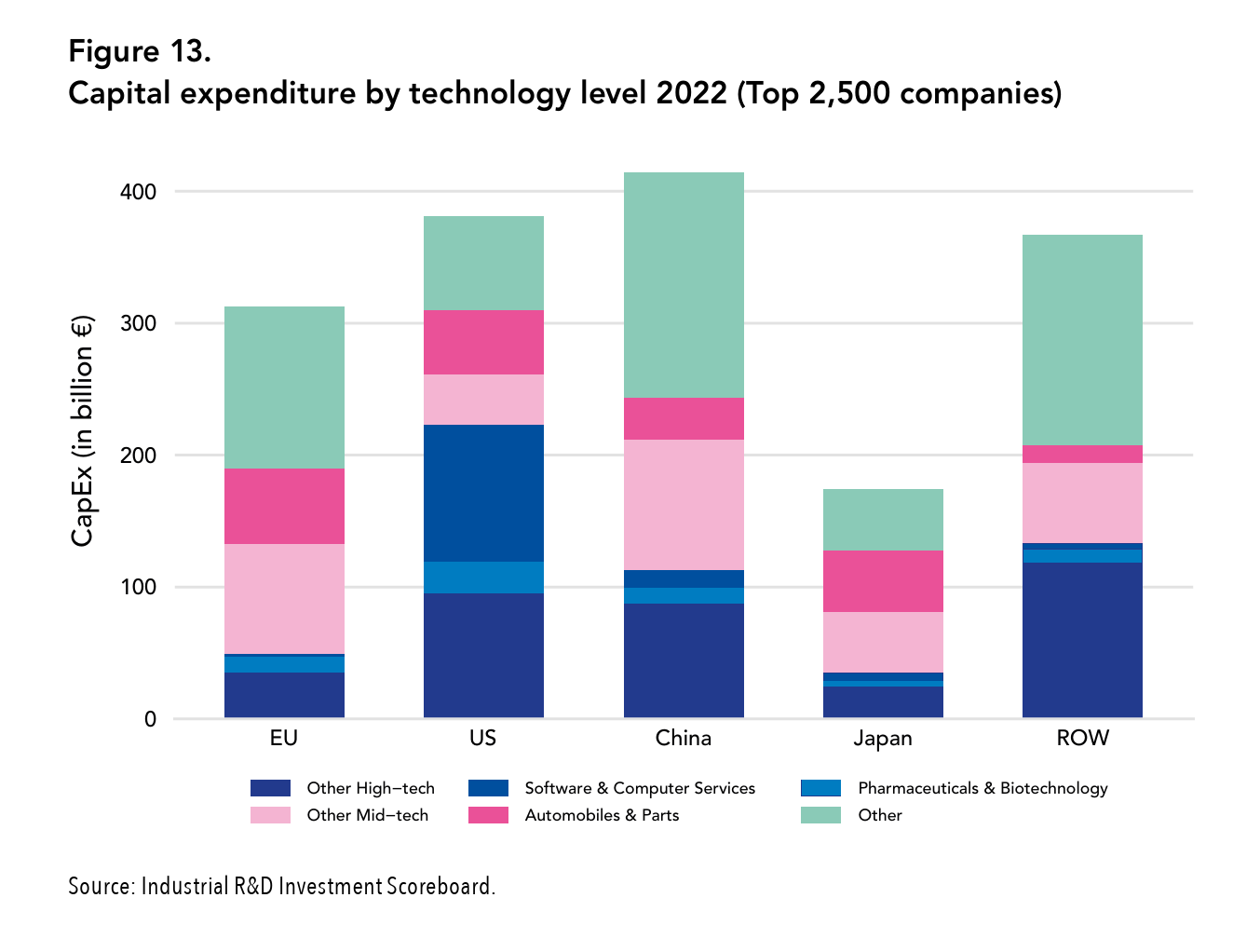
The sectoral composition of business R&D spending (BERD) in nominal terms for businesses headquartered in the four regions, plus a residual, the rest of the world (ROW). In the US, high-tech industries – mostly software & computer services and pharmaceuticals & biotechnology – account for 85% of BERD.
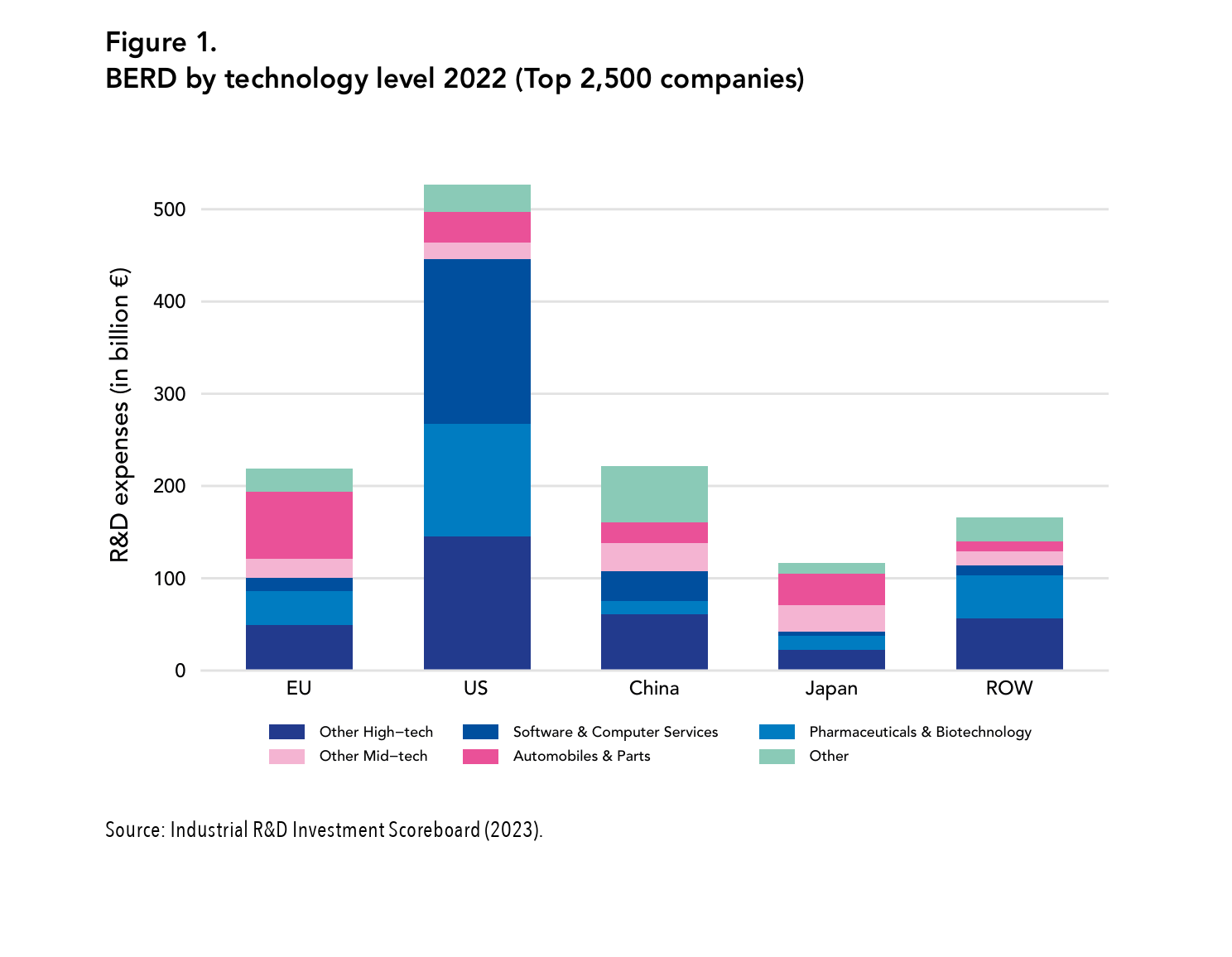
In the EU, by contrast, mid-tech industries – especially automobiles & parts – account for roughly 50% of BERD, a much higher share for mid-tech industries than in the US.5 The sectoral composition of corporate R&D spending by EUheadquartered firms is more similar to that of Japan and China than the US.
Source: European Policy Analysis Group
The IMF believes that as far as EV promotion is concerned, the EU has three options. Spoiler Alert: existing half-hearted industrial policies are the worst option.
Why German industry is in trouble!
HEY READERS,
THANK YOU for opening the Chartbook email. I hope it brightens your day.
I enjoy putting out the newsletter, but tbh, what keeps this flow going is the generosity of those readers who clicked the subscription button.

If you are persuaded to click, please consider the annual subscription of $50. It is both better value for you and a much better deal for me, as it involves only one credit card charge. Why feed the payments companies if we don’t have to.
Đorđe Andrejević Kun, The Column, 1946
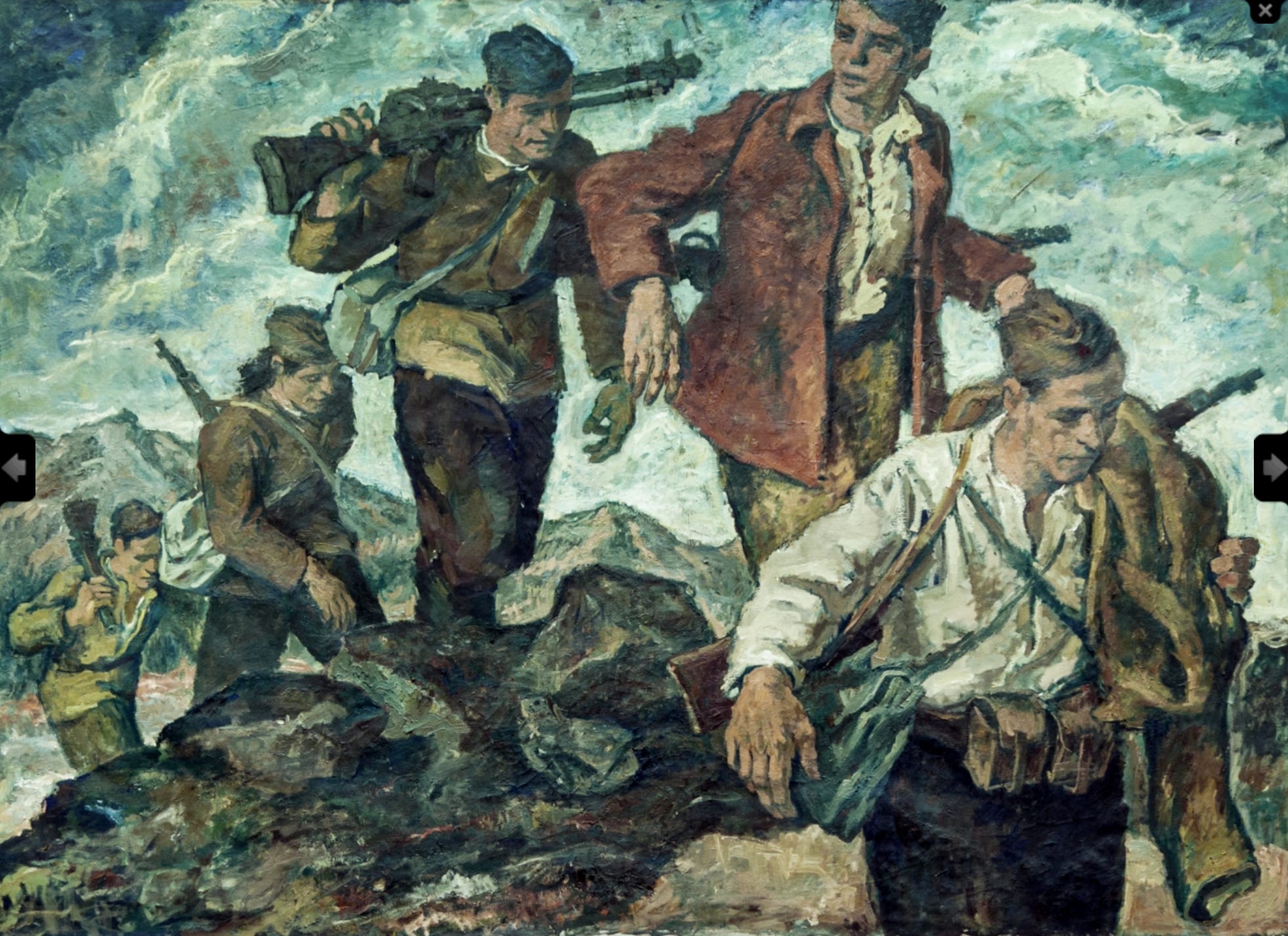
Đorđe Andrejević Kun (Serbian Cyrillic: Ђорђе Андрејевић Кун; 31 March 1904 – 17 January 1964) was a Serbian and Yugoslav painter and graphic artist, a participant in the Spanish Civil War and the National Liberation War in Yugoslavia and a member of the Serbian Academy of Sciences and Arts. He is known for his paintings, graphic designs and woodcuts. He designed the coat of arms of Belgrade, the emblem of the Socialist Federal Republic of Yugoslavia, the emblem of the Socialist Republic of Serbia and several Yugoslav orders and medals.
Source: Wikipedia
Synchronous World
After a start-up phase of several centuries, the world system is increasingly stabilizing itself as a complex of rotating and oscillating movements that maintain themselves on their own power. In the realm of circulating capital, momentum has overtaken reasons. Execution replaces legitimation, and facts have become forces majeures. Anyone speaking of globalization could just as easily refer to ‘destiny’. … Briefings have replaced critique. …
Being-in-the-world has always had elements of an overwhelmingly extended non-consideration-of-whatever-cannot-be-integrated. One of the outstanding mental effects of ‘globalization’ is the fact that it has made the greatest anthropological improbability – constantly taking into account the distant other, the invisible rival, the stranger to one’s container – the norm. The globalized world is the synchronized world; its form is produced simultaneity, and it finds its convergence in things that are current. …
There are no more time-outs in the disclosed and depicted global space. … “Mankind” – it enters the stage of contemporary thought in a state of progressive self-discovery and interconnection as the vague and splintered para-subject in a universal history of the coincidental,3
Source: In the World Interior of Capital, by Peter Sloterdijk
What is the C5+1?
On November 6, 2025, the Central Asian presidents gathered in Washington D.C. That’s never happened before – in fact, most of the Central Asian leaders have never made a formal visit to the U.S. capital, much less all at once. The summit is the crowning achievement for a little-noticed format.
For a decade, U.S. foreign policy in Central Asia has been channeled through the C5+1. Centered on nearly annual meetings of the six countries’ foreign ministers, the C5+1 has enabled the United States to approach and deal with the distant region collectively. This is particularly important as the region’s place in U.S. foreign policy has evolved beyond the war in Afghanistan. Meanwhile, the five Central Asian states – Kazakhstan, Kyrgyzstan, Tajikistan, Turkmenistan, and Uzbekistan – have deepened regional cooperation on their own in the face of a revanchist Russia and an ever-expanding China.
Source: The Diplomat
Louis Aragon / Leo Ferre L’affiche rouge
Vous n’avez réclamé la gloire, ni les larmes
Ni l’orgue, ni la prière aux agonisants
11 ans déjà, que cela passe vite 11 ans
Vous vous étiez servis simplement de vos armes
La mort n’éblouit pas les yeux des Partisans
Vous aviez vos portraits sur les murs de nos villes
Noirs de barbe et de nuit hirsutes menaçants
L’affiche qui semblait une tache de sang
Parce qu’à prononcer vos noms sont difficiles
Y cherchait un effet de peur sur les passants
Nul ne semblait vous voir Français de préférence
Les gens allaient sans yeux pour vous le jour durant
Mais à l’heure du couvre-feu des doigts errants
Avaient écrit sous vos photos “morts pour la France”
Et les mornes matins en étaient différents
Tout avait la couleur uniforme du givre
À la fin février pour vos derniers moments
Et c’est alors que l’un de vous dit calmement
“Bonheur à tous, bonheur à ceux qui vont survivre”
“Je meurs sans haine en moi pour le peuple allemand”
Adieu la peine et le plaisir, adieu les roses
Adieu la vie, adieu la lumière et le vent
Marie-toi, sois heureuse et pense à moi souvent
Toi qui vas demeurer dans la beauté des choses
Quand tout sera fini plus tard en Erivan
Un grand soleil d’hiver éclaire la colline
Que la nature est belle et que le cœur me fend
La justice viendra sur nos pas triomphants
Ma Mélinée, ô mon amour, mon orpheline
Et je te dis de vivre et d’avoir un enfant
Ils étaient 20 et 3 quand les fusils fleurirent
20 et 3 qui donnaient leurs cœurs avant le temps
20 et 3 étrangers et nos frères pourtant
20 et 3 amoureux de vivre à en mourir
20 et 3 qui criaient la France en s’abattant
History’s first recorded labor strike
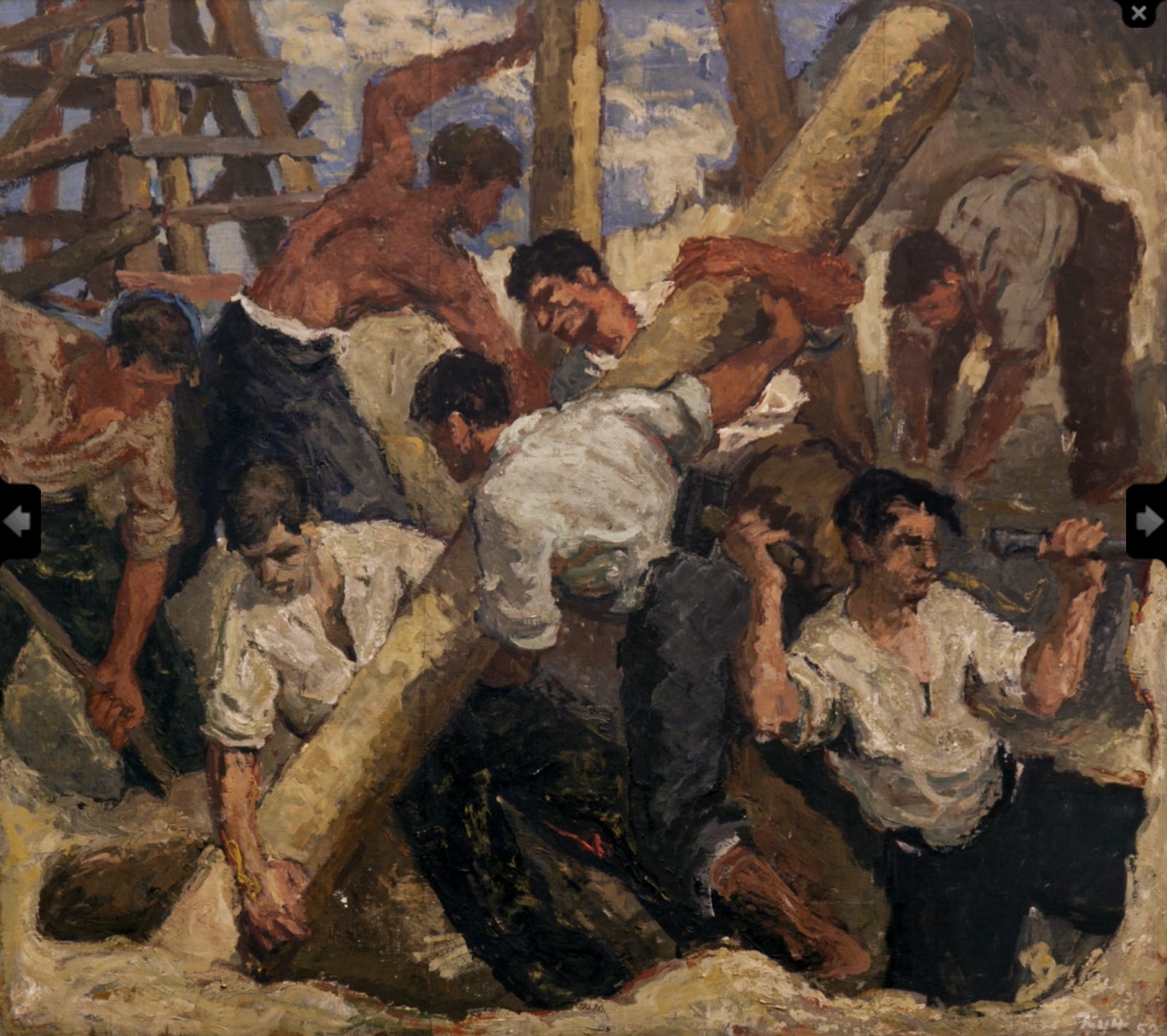
Đorđe Andrejević, Kun Izgradnja, 1951