
Comparing yields. Avoidable deaths. The tshukudu's of Goma & poetry from the factory floor.
Great links, images, and reading from Chartbook Newsletter by Adam Tooze

Thank you for opening your Chartbook email.
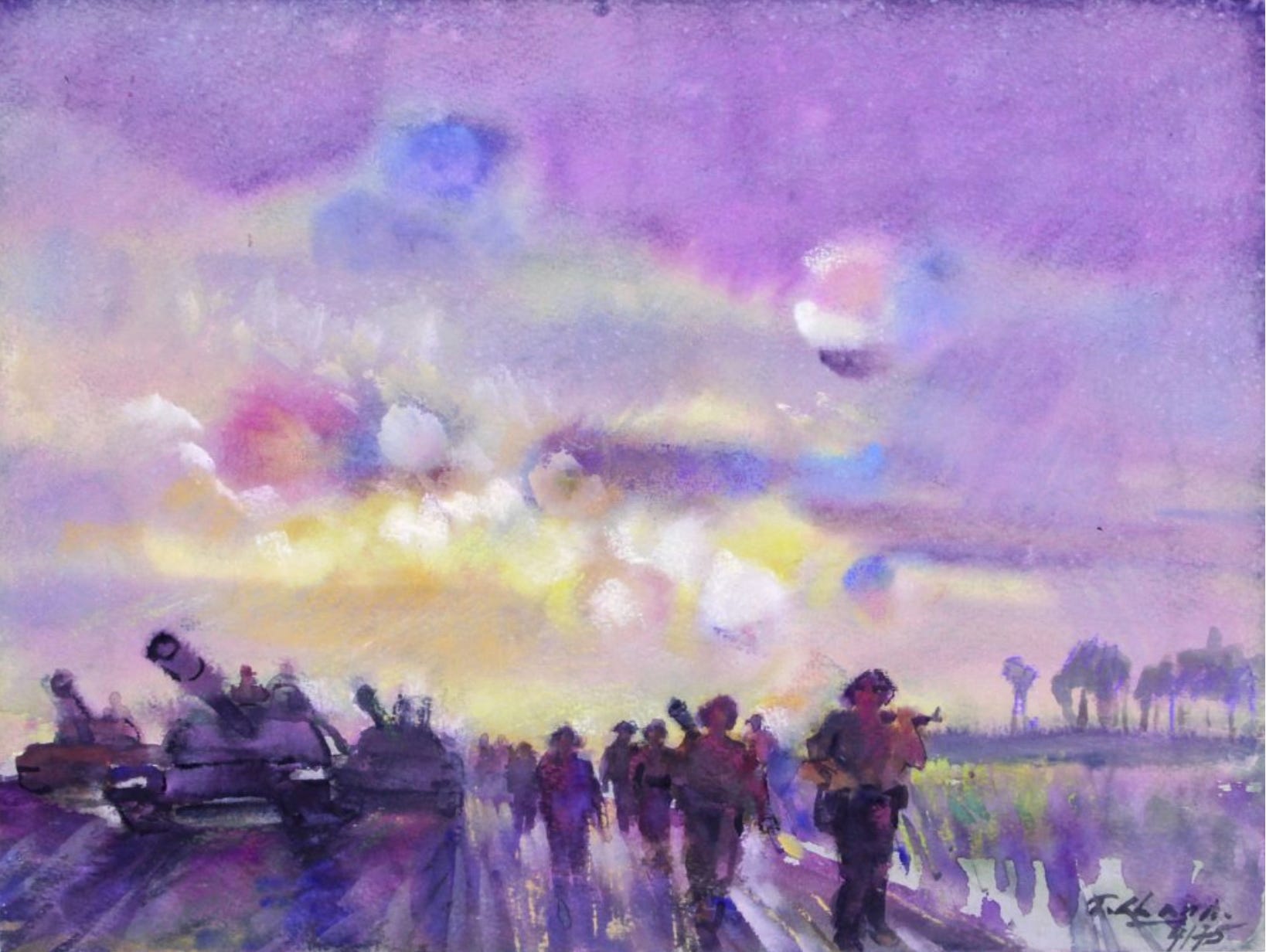
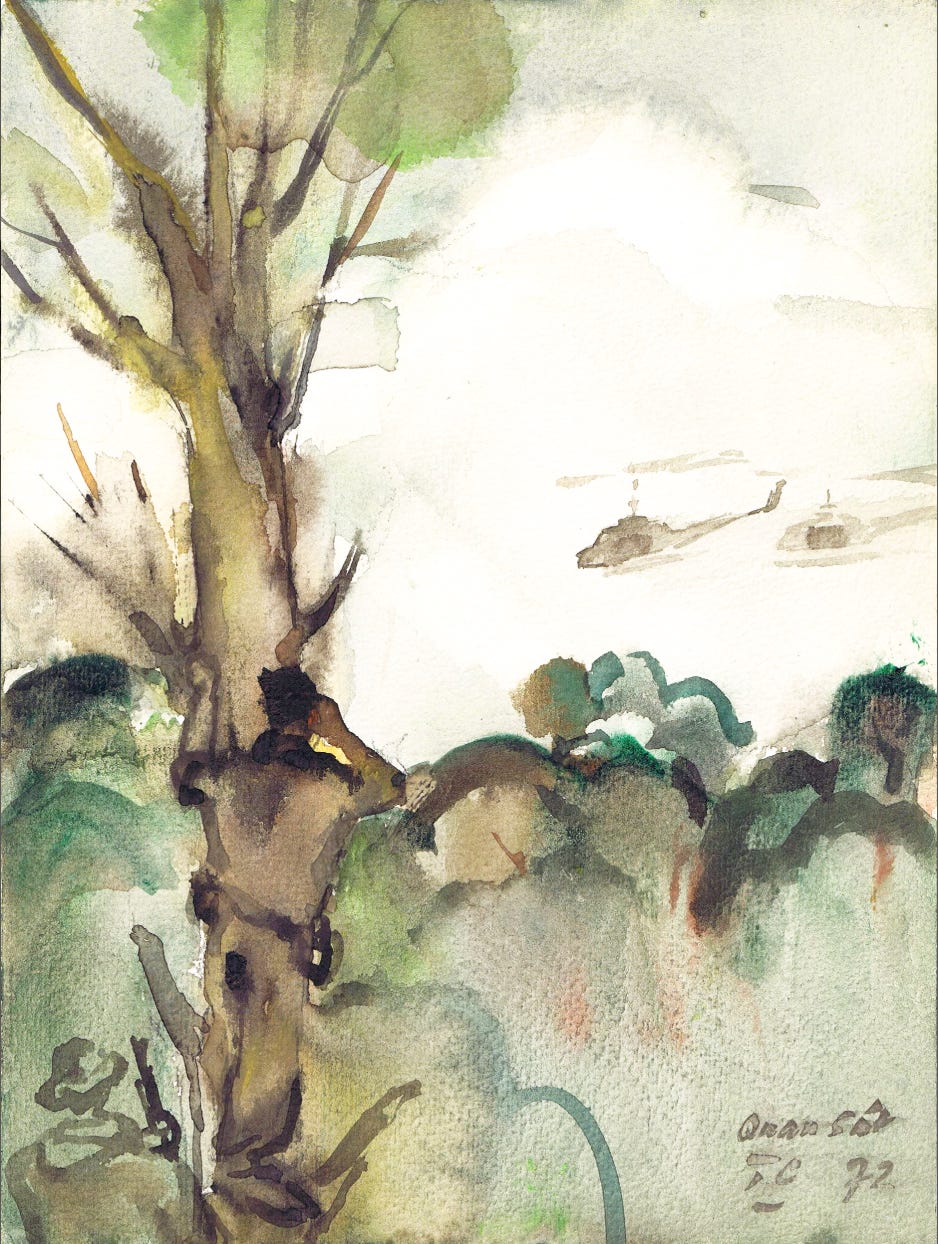
Nguyễn Thanh Châu, April 1975, outside Saigon (appears to be the northwest of Saigon due to the nature of the vegetation in the background).
Source: Vietnam the Art of War
Right now, Morocco’s ten-year bond yield is lower than that of the United States!
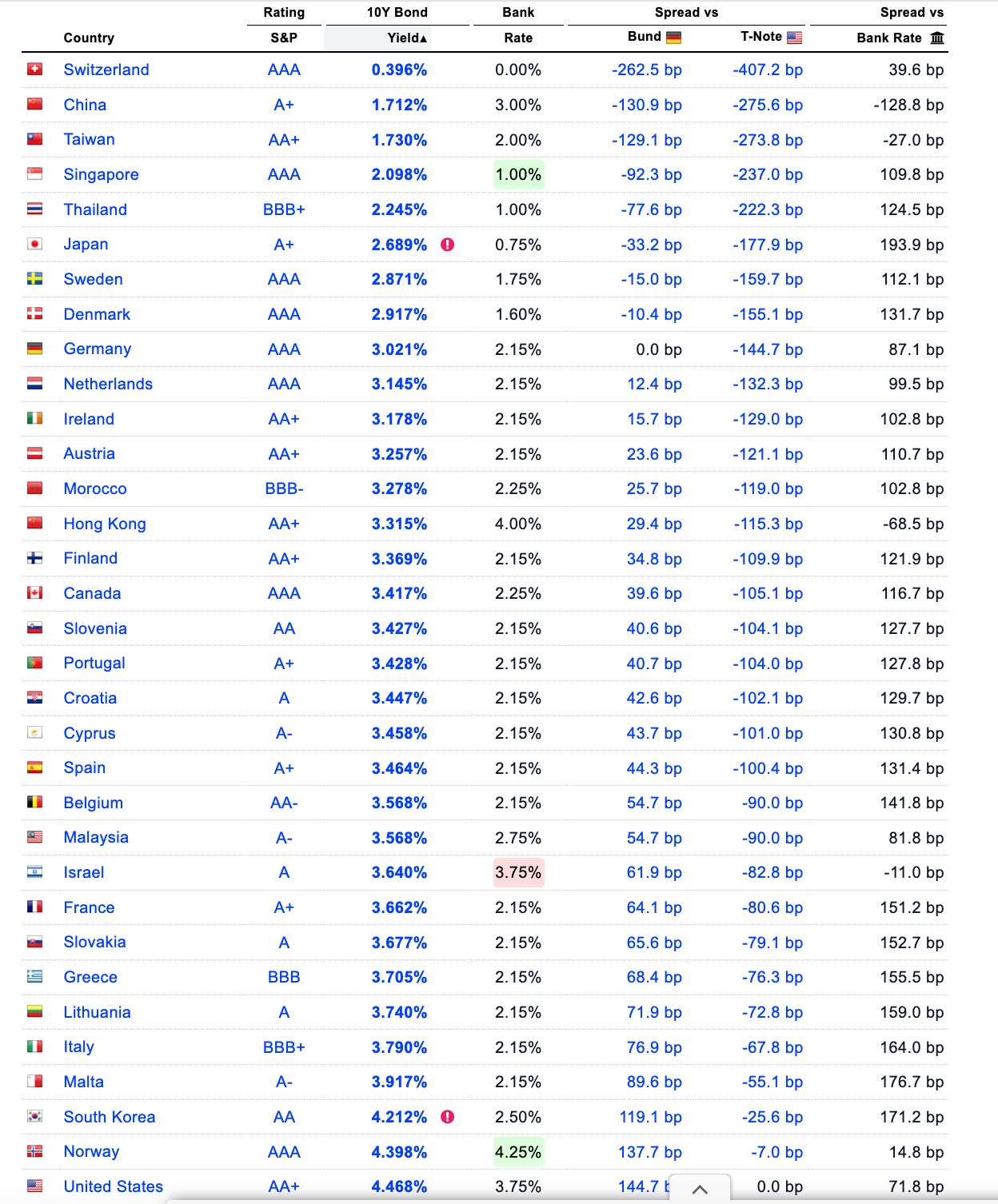
Source: World Government Bonds
This debate about EU-US comparisons is fascinating.

Around the world, residential property prices are declining mildly.
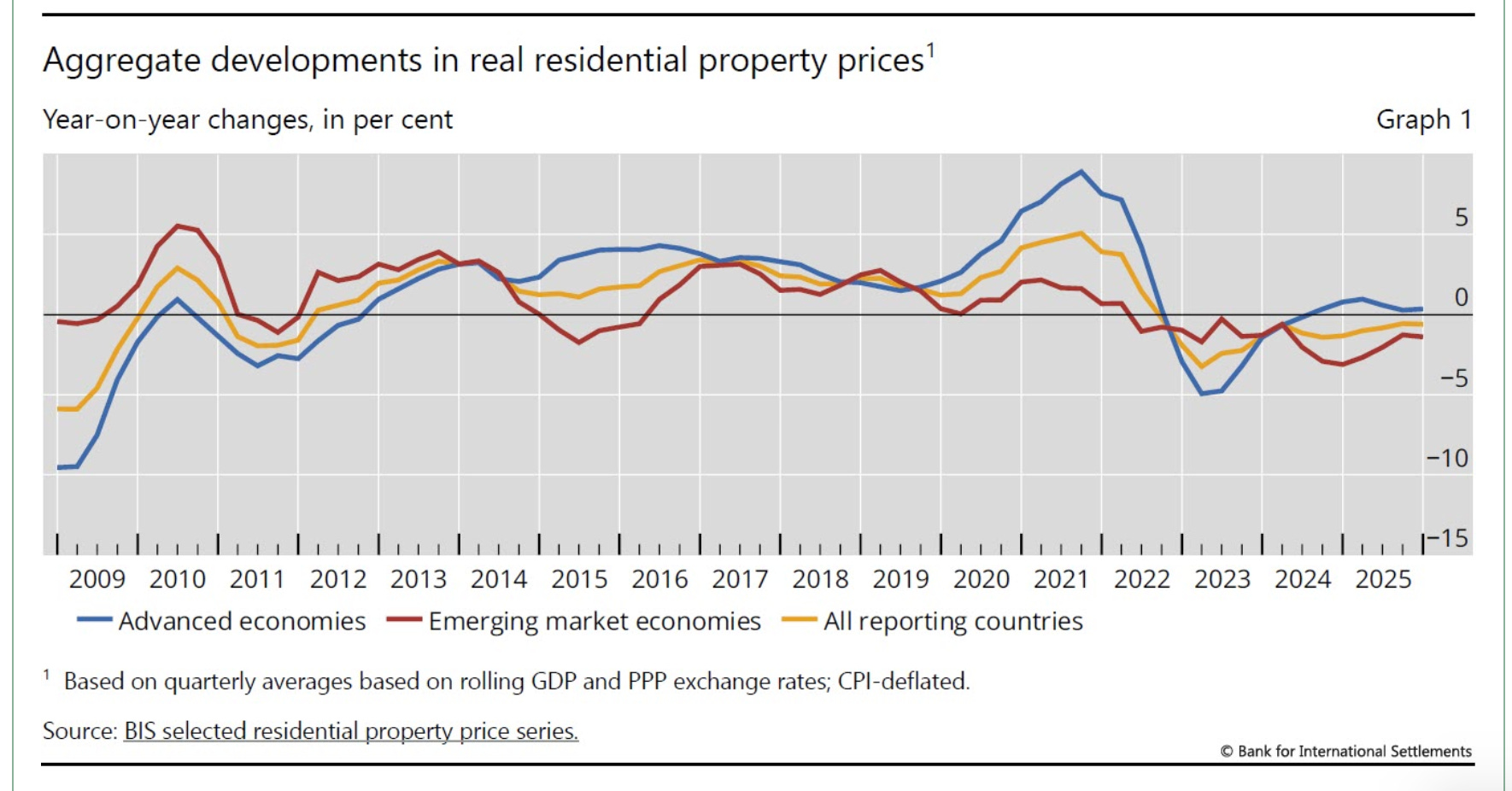
Source: BIS
HEY READERS,
THANK YOU for opening the Chartbook email. I hope it brightens your day.
I enjoy putting out the newsletter, but tbh, what keeps this flow going is the generosity of those readers who clicked the subscription button.

Photo by Jakub Dziubak on Unsplash
If you are persuaded to click, please consider the annual subscription of $50. It is both better value for you and a much better deal for me, as it involves only one credit card charge. Why feed the payments companies if we don’t have to.
COVID kickstarted the new era of industrial policy.
For contributing subscribers only.
Avoidable deaths

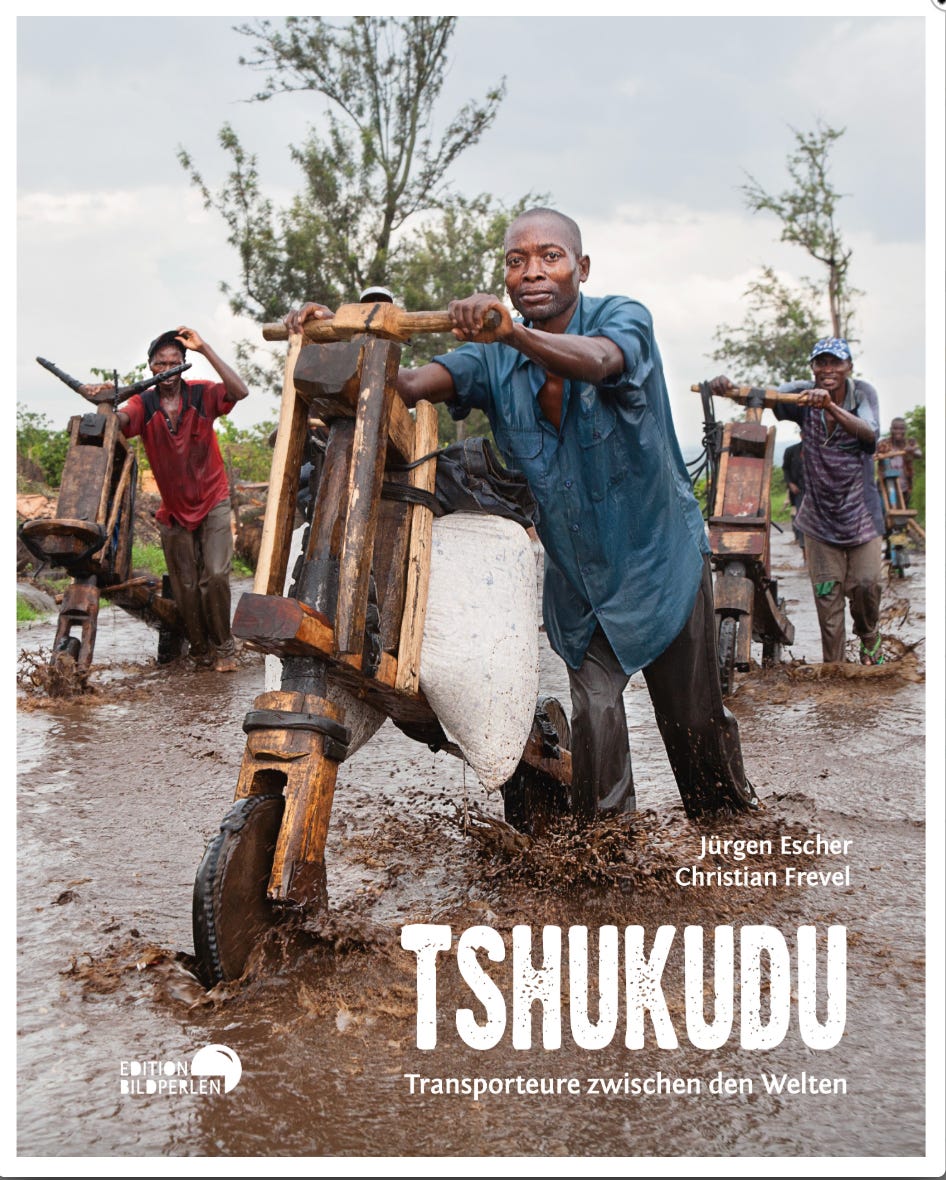
Inspired by this fantastic report in the Economist whose reporting from DRC/Rwanda has been fantastic recently!
For many outsiders the symbol of Goma is a young man with an automatic rifle. Last year the city in eastern Democratic Republic of Congo was captured by M23, rebels backed by next-door Rwanda. It remains occupied or, according to M23, “liberated”. Recently its name may also have evoked images of health workers in hazmat suits, because of the Ebola outbreak that has spread from the province to the north. The true symbol of Goma, however, is an idiosyncratic, man-powered wooden scooter known as a tshukudu. It looks as if it has been drawn by a child, with its simple, angled frame and two-metre-long deck.
Yet as a way of carrying cargo in this chaotic city, it has proved perfect. It is narrow enough to zigzag through busy markets. Rubber strips around the wheels and a spring beneath the cow-horn handlebars help absorb the shock of potholes. It can bear more weight than a bicycle: riders brag about carrying loads of more than 500kg on a single tshukudu. At $200, with no petrol costs, it is cheaper than a motorcycle. For many outsiders the symbol of Goma is a young man with an automatic rifle. Last year the city in eastern Democratic Republic of Congo was captured by M23, rebels backed by next-door Rwanda. It remains occupied or, according to M23, “liberated”.
Recently its name may also have evoked images of health workers in hazmat suits, because of the Ebola outbreak that has spread from the province to the north. The true symbol of Goma, however, is an idiosyncratic, man-powered wooden scooter known as a tshukudu. It looks as if it has been drawn by a child, with its simple, angled frame and two-metre-long deck.
Yet as a way of carrying cargo in this chaotic city, it has proved perfect. It is narrow enough to zigzag through busy markets. Rubber strips around the wheels and a spring beneath the cow-horn handlebars help absorb the shock of potholes. It can bear more weight than a bicycle: riders brag about carrying loads of more than 500kg on a single tshukudu. At $200, with no petrol costs, it is cheaper than a motorcycle. The tshukudu was apparently invented in the 1970s by farmers on the mountain slopes around Goma to take produce downhill.
To this day tshukudus allow young men to make ends meet. “The tshukudu is good because we don’t have jobs,” says Sadiki, a 26-year-old whose heaviest load was 50 cans of petrol and who says he once carried a cow. “It was not alive,” he clarifies. The war between Congo and M23 is hurting business. Banks remain closed. Farmers have fled their land. Many aid workers have left. Sadiki says that shoppers who once bought 20kg of rice buy just 5kg at a time, so they need him less. Meanwhile cheap motorised cargo tricycles from India and China—known as “three hills” after the number of wheels—are competing for the remaining heavy loads. “The three-hill drivers are taking our market,” sighs Bahati, 23.
Source: The Economist
Nguyễn Thanh Châu, 1972, Mỹ Tho in the Mekong Delta, "Quan sát (Observing)."
New Workers: Poetry from the Factory Floor
A conversation with Xiao Hai Tony Hao , May 26, 2026
One migrant worker artist community that has gained nationwide fame is Picun, a commune on the outskirts of Beijing. There, residents regularly convene as part of the New Workers’ Literature Group, where they exchange original writings and attend lectures taught by editors and professors. Among the most active members of the group is Xiao Hai, a Henan-born poet who has been living at Picun since 2017. In 2019, he wrote a short memoir about his time working in the southern city of Shenzhen after dropping out of middle school. I first encountered it when it was republished under the title “Adrift in the South” in early 2024 by the Chinese literary and culture magazine One Way Street. I had the privilege of translating it into English for a China-focused issue of Granta. Neither Xiao Hai nor I had any idea that this would lead to the commission of a book—his debut book in any language, out this month. An expansion of the shorter piece, it follows Xiao Hai’s thirty-eight years of life, from his childhood in rural Henan, his stops across Southern China working in factories, to his eventual journey north to Picun, where he currently lives, working at a thrift store.
Xiao Hai: When I was at my first factories in Shenzhen, I knew and thought little about how the world regarded me and my fellow workers. It was about a decade after I started working in the South when I learned of the term 农民工 (migrant workers, or literally, peasant workers)[*]. I thought that the expression referred to those from the countryside who had moved to the city for blue-collar jobs—specifically older people working on construction sites. Of course, the term encapsulates those of all age groups. I’ve met many people who dislike the expression, and I don’t quite find it suitable either. Especially after I came to Picun, I’ve come to prefer the term 新工人 (new workers). Back in the 1980s, when the first wave of blue-collar workers left the countryside, they were actually looking forward to working in the city, though they slowly grew ashamed of their status and tried their best to find other job opportunities. I wouldn’t go as far as saying the term 农民工 carries stigma, but it certainly does not carry any positive connotations. The expression 新工人 suggests that my fellow coworkers and I have our own demands—we aren’t machines who can work twelve hours every day without ever getting tired. We want to have time for ourselves outside our jobs. Besides, we also have dreams. If we can’t realize them in real life, then we can turn to creativity and art, painting and music—all forms of spiritual needs and pursuits. This is where I see the term 新工人 differ from other outdated terms. Especially 农民工—the word evokes the stereotypes the mass holds against us, and it implies that the mass otherizes us. People should pay closer attention to our true state of being within and beyond our workplace. They should abandon their biases that we workers are inherently powerless and have no agency over our lives.
Source: The Baffler
Chinese Workers, Xiao Hai
I am a Chinese worker
Our revolutionary comrades are found in every
   corner of the Earth
Perhaps consciously or perhaps unintentionally
We truly stand here
Traveling the world’s ups and downs with our
   hands that feed horses and chop wood
I am a Chinese worker
Lurking inside the desire of tall mansions in steel
   and concrete is our captive cut-price
Youth
The changes of the season are not ours
Food and vegetables don’t need our attention
All we can do is let the mystery of the words
   Made in China
Fiercely flood every river leading to the four
   oceans and seven continents
And at every intersection
Take the spoils of the October Revolution
To exchange for much sought-after ticket stubs to
   return home at year’s end

I am a Chinese worker
Let those days of monotonous factory
   life explode and tumble in the cogwheels of
   time
On the quay, the suitcases that have crossed
   oceans and seas are stuffed with our
Penniless and ephemeral pursuits
The sparks of the years howl
Torrential rain in the heart, endless winds
Between lightning and thunder we ask ourselves
When will we give our lives a wild run
Eight thousand miles is too far
Three thousand miles is too near
We are in this vast land, nine million six hundred
   thousand kilometers
Surviving the night
I come from a village
You come from a town
Both of us fight barefoot in this dreamy big city
Against the gunfire of the Second Industrial
   Revolution
I wish to write those blond-haired yuppies with
   blue eyes across the ocean
A letter
A letter that can’t be delivered
Tell them of the blooming of spring flowers
Tell them how high birds fly
Tell them those walking in the streets
Wear clothes that appear decent
Oh, but they make us feel embarrassed
We sleep ashamed on the warm beds in the
   workshop
Without warning we wake up in shock
Full of incomprehension
Full of drilling pain

I want to ask them
Why is the dawn sun covered by dark clouds
Why isn’t there a rainbow after rain
Why are nights in the city bright as day
Why are rivers, once grand, now sparkling gold
A shining place or somewhere with overgrown
   grass
There grow Chinese workers standing side by
   side like the Great Wall
There grow Chinese workers covering mountains
There grow Chinese workers holding bronze tools
There grow Chinese works who smoke and puff
There grow Chinese workers who are armored
There grow Chinese workers quiet as a riddle
There grow Chinese workers
There grow Chinese workers
There grow Chinese workers
I am a Chinese worker
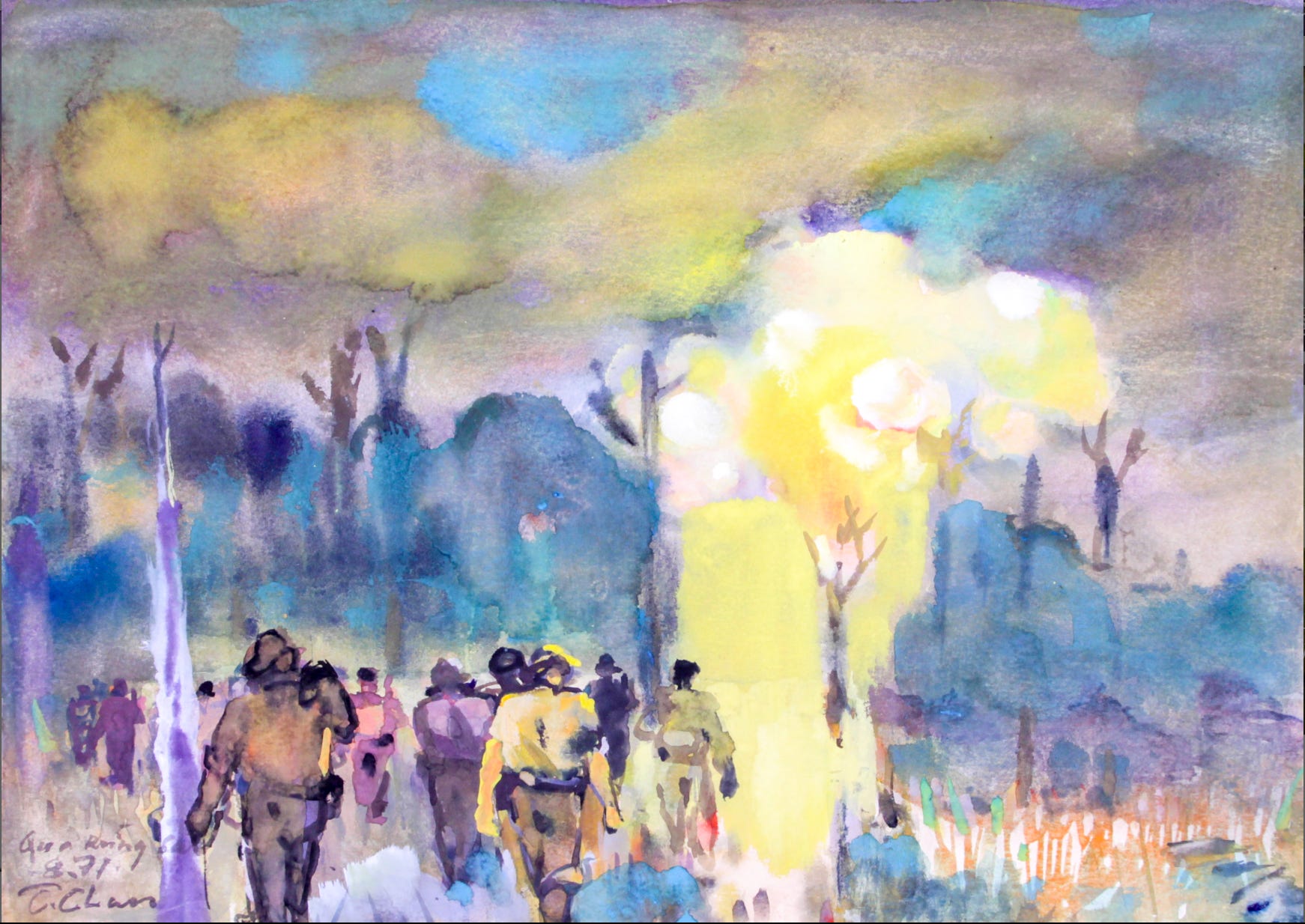
Nguyễn Thanh Châu, August 1971, Sác Forest (today known as Cần Giờ Mangrove Forest),
If you’ve scrolled this far, you know you want to click: